

Ohio Registered-Voter Survey: 61.5% Support Bipartisan Congressional Reform Plan
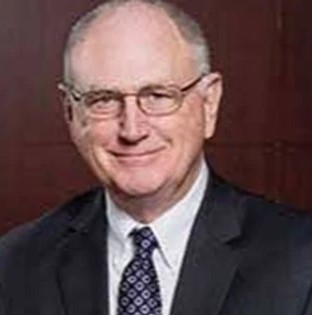
Jerome A. Madden is the President of Fulfilling America's Promise
42.9% Say a Candidate's Support for the Proposal Would Make Them More Likely to Vote for That Candidate
We are asking them to support a process that requires Democrats and Republicans to work together, develop legislation and put it to a vote.”
WASHINGTON, DC, UNITED STATES, September 22, 2026 /EINPresswire.com/ -- Fulfilling America’s Promise, a nonpartisan civic organization, has asked Ohio U.S. Senate candidates Sherrod Brown and Jon Husted whether they will support a proposal designed to require Congress to address major national problems through a structured bipartisan process and guaranteed up-or-down votes.— Jerome A. Madden, President, Fulfilling America’s Promise
The request follows three tests of public sentiment: a February 2026 national survey of 1,133 registered independent voters; a 45-day Facebook and Instagram campaign generating approximately 1,400 endorsements; and a new SurveyMonkey survey of 408 registered Ohio voters.
Ohio Registered Voters: 61.5% Support Proposal
After receiving a detailed description of the proposal:
61.5% supported the proposal, 13.5% opposed it and 25.0% were unsure.
42.9% said a candidate’s support would make them more likely to vote for that candidate, compared with 6.9% less likely; 34.3% said no difference and 15.9% were unsure.
Given a choice between a Senate candidate supporting the proposal and one opposing it, 36.8% selected the candidate supporting it, compared with 13.7% selecting the candidate opposing it; 24.3% said no difference and 25.3% were unsure.
58.8% favored requiring Congress to hold a final vote after legislation completed the proposed bipartisan process and obtained bipartisan sponsorship; 41.2% favored retaining existing procedures.
The survey included 408 Ohio respondents who identified themselves as registered voters. Unregistered respondents were excluded from these results.
National Survey Found Broad Support
The February national survey of 1,133 registered independent voters, with a ±3 percentage-point margin of error, found:
87% said polarization prevents Congress from addressing major national problems;
81% supported requiring bipartisan cooperation;
77% supported using bipartisan commissions to develop legislation;
79% supported the proposed bipartisan-cooperation framework; and
71% favored Congress addressing one major issue at a time.
45-Day Campaign Generated 1,400 Endorsements
During a 45-day Facebook and Instagram campaign in July and August:
Approximately 1,400 individuals endorsed the proposal, each providing a name, email address and ZIP code;
Approximately 4,500 link clicks were generated, with roughly 31% resulting in an endorsement;
More than 10,800 engagements were recorded; and
Approximately 3,400 reactions, 360 comments and 780 shares were generated.
Each endorsement required an affirmative expression of support and identifying and contact information.
A Process Designed to Require Bipartisan Action
Under the Make Congress Work Again proposal, each two-year Congress would select one — or at most two — major national problems from a defined list including immigration, Social Security, Medicare and Medicaid funding, health-care insurance, housing policy, structural budget imbalances, and federal election reform.
For each issue, a 16-member commission would consist of eight members of Congress — four Democrats and four Republicans — and eight outside experts selected on a bipartisan basis.
The commission would have six months to develop legislation and conduct at least three public hearings. Approval would require a majority, including at least two congressional members from each party. Every member of Congress could propose amendments.
Legislation would then require bipartisan sponsorship in both chambers. Procedural roadblocks, including the Senate filibuster, would be suspended for that legislation, followed by debate and final up-or-down votes.
The proposal does not dictate the result on any issue. It establishes a process requiring bipartisan participation in developing legislation and requiring Congress ultimately to vote.
Candidates Asked to Take a Position
“We are not asking Senator Brown or Senator Husted to endorse a Democratic solution or a Republican solution,” said Jerome A. Madden, President of Fulfilling America’s Promise. “We are asking them to support a process that requires Democrats and Republicans to work together, develop legislation and put it to a vote.”
Fulfilling America’s Promise has asked both campaigns to respond.
About Fulfilling America’s Promise
Fulfilling America’s Promise is a nonpartisan, one-issue civic organization unaffiliated with any political party or candidate. Its leadership has significant Ohio roots: Chairman B. Patrick Madden is an Ohio native and Yale graduate, and President Jerome A. Madden is a graduate of Franciscan University of Steubenville and earned his J.D., summa cum laude, from the University of Dayton School of Law before serving as a law clerk to the Chief Justice of the Supreme Court of Ohio.
Jerome A Madden
Fulfilling America's Promise
+1 571-224-1749
email us here
Visit us on social media:
Facebook
Legal Disclaimer:
EIN Presswire provides this news content "as is" without warranty of any kind. We do not accept any responsibility or liability for the accuracy, content, images, videos, licenses, completeness, legality, or reliability of the information contained in this article. If you have any complaints or copyright issues related to this article, kindly contact the author above.
